
What Happens When an Israeli Dies Without a Will? The 2026 Legal Guide
What Happens When an Israeli Dies Without a Will?
Imagine the sudden shock of losing a loved one, only to find out days later that your family bank accounts are frozen and your home’s legal status is in limbo. For many, this is the first time they truly ask themselves what happens when an Israeli dies without a will.
When there is no written will, the state applies a rigid legal hierarchy that can leave families feeling powerless against a cold regulatory system.
It’s natural to feel anxious about the complex “Parentelae” system or the fear that the State of Israel might seize assets.
You’re looking for protection and clarity in a time of grief. This 2026 legal guide replaces that confusion with professional certainty.
You’ll learn exactly how the Israeli Inheritance Law of 1965 distributes property by default and how the law prioritizes different family members.
We’ll explain the practical steps to unlock frozen accounts, navigate the Registrar of Inheritance’s digital process, and avoid the bitter family battles that often follow an intestate death.
By the end of this guide, you’ll have a clear roadmap to secure your legacy and protect your family’s future from bureaucratic delays.
Key Takeaways
- Understand the “Parentelae” system, which dictates exactly how assets are split between spouses, children, and other relatives when no written instructions exist.
- Learn what happens when an Israeli dies without a will and why obtaining a digital Succession Order is the only legal way to transfer ownership of real estate and vehicles.
- Discover why banks immediately freeze accounts after a death and the specific legal requirements needed to release funds for immediate family expenses.
- Navigate the complexities of inherited real estate, including how existing mortgages can complicate the transfer of property to the rightful heirs.
- Find out how professional legal representation helps identify hidden assets and protects heirs from inadvertently inheriting the deceased’s undisclosed debts.
Understanding Intestate Succession: The Israeli Inheritance Law 1965
The Israeli legal system operates under a clear principle: your property must always have a defined owner. When a person passes away without leaving a valid, written will, the state steps in through a mechanism known as Intestate Succession (Yrusha al pi din).
This isn’t a random or arbitrary process. It’s governed strictly by the Inheritance Law of 1965, which acts as a societal safety net.
The law is designed to ensure that assets remain within the family unit and are distributed in a way that the legislature deems “natural” for the average citizen.
Many families are caught off guard when they realize what happens when an Israeli dies without a will.
The immediate legal status of the estate is one of total “freezing.” At the moment of death, the deceased’s assets become a separate legal entity.
Until the authorities verify the rightful heirs, no one has the legal power to sell a car, transfer a real estate deed, or withdraw significant funds from the deceased’s bank account. This state intervention is mandatory because the government requires a clear, documented chain of title for all registered assets in the country.
The Default Will: How the Law Replaces Your Intent
Think of the Inheritance Law as the state’s “default will” for every citizen.
It assumes you would want your assets divided among your closest blood relatives and your spouse.
The Registrar of Inheritance Affairs (HaRasham le’inyanei Yerusha) oversees this process, ensuring that the distribution follows the rigid hierarchy set in the statutes.
While this system provides order, it often fails to account for the complexities of modern family structures.
For instance, stepchildren or long-term partners who haven’t registered as common-law spouses might find themselves completely excluded. Without a proactive צו ירושה (Succession Order), the family remains in a state of legal paralysis, unable to manage the legacy left behind.
When the State Becomes the Heir
A common anxiety among Israelis is the fear that the government will simply seize a person’s life savings.
In reality, the State of Israel only inherits an estate as an absolute last resort. This occurs when the Administrator General (Apotropos HaKlali) cannot locate any heirs within the three circles of kinship defined by law.
If no heirs are found, the state manages the assets.
There is a window of time for heirs to come forward, but if the estate remains unclaimed for many years, the assets are eventually transferred to the state treasury. Identifying even distant relatives is critical to keeping the estate within the family and preventing it from becoming state property.
The Hierarchy of Heirs: The Three Parentelae System
The Israeli Inheritance Law doesn’t distribute assets randomly. It follows a structured, mathematical hierarchy known as the “Parentelae” system (ראשי אב).
This system organizes relatives into three distinct circles based on their biological and legal proximity to the deceased.
Understanding the logic of these circles is the first step in answering the question of what happens when an Israeli dies without a will.
The most critical rule to remember is the “All or Nothing” principle: as long as there is at least one heir in a higher circle, the lower circles are completely blocked from inheriting any part of the estate.
Before the estate is split among these circles, the surviving spouse holds a unique legal status.
By law, the spouse is entitled to all movable property, including the family car and household furniture.
Only after these items are removed from the “pool” is the remaining estate divided according to the specific branch currently in play.
The Inheritance Registrar uses this rigid structure to issue Succession Orders, ensuring that the distribution remains predictable and legally sound.
The First Branch: Children and Their Descendants
The first circle of kinship includes the children of the deceased and their descendants.
In a standard scenario where a person leaves behind a spouse and children, the estate is split 50/50.
The spouse receives half, and the children share the remaining half equally.
It’s important to recognize that the law makes no distinction between children from different marriages.
A child from a first marriage has the exact same legal claim as a child from the current marriage.
If a child has already passed away, their share doesn’t vanish; it passes to their own children (the deceased’s grandchildren) through a principle called “representation.”
The Second and Third Branches: Parents and Grandparents
If the deceased had no children or grandchildren, the law moves to the second branch: the parents and their descendants (the deceased’s siblings).
In this situation, the surviving spouse’s share increases significantly to two-thirds (2/3) of the estate, while the parents or siblings split the remaining third.
If the parents are no longer alive, the siblings of the deceased step into their place. The third and final branch consists of grandparents and their descendants (uncles and cousins).
This tier only becomes relevant if there are absolutely no heirs in the first two circles. Because these rules are so rigid, families often find that the “default” distribution creates unexpected friction.
If you find yourself facing a complex family structure with multiple heirs, it’s often wise to seek professional legal clarification to ensure everyone’s rights are protected.
Every heir within a branch inherits an equal portion of that branch’s total share.
This mathematical precision prevents the state from having to make subjective “fairness” calls, but it also means that without a will, you cannot reward a child who was a primary caregiver or exclude a relative with whom you were estranged.
The law only recognizes the biological and marital ties documented in the population registry.
The Legal Process: Obtaining a Succession Order
Understanding the legal share of each relative is a theoretical exercise until you hold a formal צו ירושה (Succession Order) in your hands.
This document is the only legal instrument recognized by Israeli banks, the Land Registry (Tabu), and insurance companies to transfer assets from the deceased to the heirs. Without it, the estate remains a locked vault.
The process is overseen by the Registrar of Inheritance Affairs, but the Administrator General (HaApotropos HaKlali) also plays a critical role.
They act as a watchdog, reviewing every application to ensure that no heirs have been excluded and that the distribution follows the 1965 law precisely.
The timeline for receiving this order has improved significantly with modern reforms, but it still requires patience and precision.
On average, a standard application takes between 30 and 50 days to process, provided there are no legal objections.
A key part of this timeline is the mandatory public notice. Once an application is filed, it must be published in a daily newspaper and the official gazette. This starts a strict 14-day clock during which any person can submit an objection to the order.
Knowing what happens when an Israeli dies without a will helps you prepare for this waiting period, ensuring you don’t make financial commitments before the assets are legally yours.
Steps to File for a Succession Order in 2026
-
Gathering Documentation: You’ll need the death certificate and the ID numbers of all legal heirs. While the Ministry of Interior often updates death records automatically, having a physical copy is necessary for the filing process.
-
Digital Submission: Most applications are now handled through a centralized digital portal. This isn’t just a matter of convenience; it’s also more cost-effective. As of June 2026, the fee for an online application is 507 ₪, compared to 597 ₪ for manual filing.
-
Affidavit Verification: Even in a digital world, the law requires a lawyer or a court official to verify the applicant’s signature on the primary affidavit. This prevents fraudulent claims from entering the system.
-
Publication and Waiting: After the fees are paid, the Registrar handles the newspaper publication. You must wait for the 14-day objection period to expire before the order can move toward final approval and digital issuance.
Digital vs. Physical Filing: Pros and Cons
The 2026 digital portal is built for speed and efficiency, making it the ideal choice for simple estates with clear family trees.
Digital orders are now issued electronically and sent directly to government bodies, which means you don’t have to carry physical papers to the bank.
However, digital filing has its limits. If your case involves complex family dynamics, such as heirs living abroad or disputed common-law spouse status, the system may flag the application for manual review.
In these instances, the precision of a physical filing, backed by detailed legal documentation, is often necessary to prevent the Registrar from rejecting the request due to technical errors.
Stalling the process due to a simple filing error can leave a family in financial limbo for months, which is why professional oversight is often the safest path to securing the estate.

Common Pitfalls and Why ‘Automatic’ Distribution Fails
Many families assume that the Israeli legal system will handle everything smoothly after a loss.
They believe the “default” will is enough to protect them. In reality, relying on the state’s distribution often leads to immediate financial and legal roadblocks.
One of the most painful realizations for heirs is what happens when an Israeli dies without a will regarding their daily liquidity.
There is a common myth that banks will allow family members to withdraw funds for immediate needs, like funeral expenses or shiva costs.
This is false. Once a bank receives notice of a death, they typically freeze the account until a formal Succession Order is presented. This can leave a grieving family without access to cash for weeks or even months.
Real estate adds another layer of complexity.
If the deceased owned a home with an existing רישום משכנתא (mortgage registration), the transfer of ownership isn’t automatic.
The bank must approve the heirs as the new “debtors,” which requires a separate legal and financial vetting process.
Without a will that clearly outlines how the mortgage debt and the property should be handled, heirs often find themselves in a deadlock with the lender.
This can prevent the sale or rental of the property, causing its value to stagnate while debts continue to accrue.
The Asset Freeze: Why You Can’t Wait
Israeli banks are notoriously rigid when it comes to the death of an account holder. Even if you have a “Survivorship Clause” (Seif Arichut Yamim) on a joint account, you should know its limits.
While it allows the surviving partner to continue performing routine operations, it doesn’t grant them ownership of the deceased’s half of the money.
If other heirs object, the bank may still lock the funds. Delaying the legal registration of the estate doesn’t just cause stress; it risks legal disputes over the management of assets that lose value while the family waits for the court’s decision.
From Inheritance to Incapacity: The Missing Link
The lack of a will is often a symptom of a larger problem: the absence of a comprehensive end-of-life plan. Protecting your family’s future starts while you’re still healthy.
A critical tool in this process is the ייפוי כוח מתמשך (Ongoing Power of Attorney). This document ensures that your assets are managed by someone you trust if you become incapacitated, bridging the dangerous gap between your life and the eventual probate process.
Emanuel Trach Law Office specializes in creating these protective layers, ensuring that your estate never falls into the hands of the state or becomes a source of family conflict. To secure your family’s financial stability before a crisis hits, contact our office for a professional consultation.
Common-law spouses (Yaduim B’tzibur) face the steepest climb in this system. Without a written agreement or a will, they must prove their relationship in court to claim their legal share. This process is invasive, expensive, and often contested by the deceased’s children or siblings.
The “automatic” law treats them as strangers until a judge says otherwise. Even sentimental items, like jewelry or family heirlooms, become part of the cold 50/50 calculation, often sparking emotional battles that a simple will could have prevented.
Securing the Estate: Professional Guidance for Heirs
Navigating the aftermath of a loss is rarely a purely mathematical exercise. While the law provides a clear framework, the actual implementation often requires a high level of technical expertise.
Families often struggle to understand what happens when an Israeli dies without a will when their situation involves more than just a single bank account.
Professional legal representation becomes a shield, protecting heirs from administrative errors and ensuring that the division of assets is handled with the discretion and dignity the situation deserves.
One of the most significant advantages of hiring an attorney is the ability to conduct a comprehensive asset search. Many Israelis hold pension funds, life insurance policies, or dormant bank accounts that don’t appear in standard paperwork.
Conversely, an attorney identifies the deceased’s debts. Since Israel has a 0% inheritance tax, the focus shifts entirely to the net asset value.
We ensure you don’t accidentally inherit liabilities that exceed the estate’s value. If family members disagree on the valuation of a family home or business, professional mediation can prevent a permanent rift while keeping the process out of the public courtroom.
Why Experience Matters in Inheritance Law
The 2026 digital landscape requires more than just technical skill; it requires an understanding of how the Registrar’s bureaucracy reacts to anomalies.
If heirs live in the United States or Europe, the process of verifying foreign documents can stall an application for months.
A seasoned advocate knows how to bypass these bottlenecks, ensuring that international assets are integrated into the Succession Order without delay.
This proactive approach provides the peace of mind that your family’s interests are being guarded by someone who knows the system from the inside. We handle the friction so you can focus on your family.
Next Steps: Consultation and Protection
Moving from legal uncertainty to full ownership requires a clear plan. Your first step should be a status review to determine the exact hierarchy of heirs and the estimated value of the estate. To prepare for a consultation, you should begin organizing the following items:
-
Official death certificates and ID numbers of all legal heirs.
-
Known property deeds, vehicle registrations, and recent bank statements.
-
Documentation regarding any common-law partner claims or previous marriage agreements.
Finalizing the צו ירושה (Succession Order) is the final hurdle in securing your legacy. Once the order is issued, we coordinate directly with the Land Registry (Tabu) and financial institutions to update ownership records.
This effectively unlocks your inheritance and allows for the legal sale or transfer of assets without further state interference.
For professional legal assistance in navigating the complexities of Israeli inheritance law and securing your family’s estate, please contact Attorney Emanuel Trach.
Our office provides expert guidance and representation to ensure your rights are protected throughout the legal process.
You can reach us by phone at 055-2550011 or via email at Emanuel@Trach-Law.co.il to schedule a formal consultation.
Securing Your Family’s Legacy Today
The Israeli legal framework provides a safety net, but it’s a rigid one that doesn’t account for your family’s unique emotional and financial dynamics.
You now understand what happens when an Israeli dies without a will and the risks of leaving asset distribution to the state’s default hierarchy.
From the immediate freeze of bank accounts to the complexities of inheriting mortgaged real estate, the path forward requires more than just patience; it requires professional precision.
Emanuel Trach Law Office offers the discreet and professional legal representation you need to navigate these high-stakes transitions.
With specialized knowledge of the Israeli Registrar bureaucracy and extensive expertise in complex estate management, we ensure that your inheritance rights are fully protected.
Don’t let administrative delays or family friction threaten your financial future. Contact Attorney Emanuel Trach for a professional legal consultation today. You deserve the confidence that comes from having an expert advocate by your side.
For professional legal assistance in navigating the complexities of Israeli inheritance law and securing your family’s estate, please contact Attorney Emanuel Trach.
Our office provides expert guidance and representation to ensure your rights are protected throughout the legal process. You can reach us by phone at 055-2550011 or via email at Emanuel@Trach-Law.co.il to schedule a formal consultation.
Frequently Asked Questions
Does a common-law partner inherit if there is no will in Israel?
Yes, common-law partners (Yadua b’tzibur) can inherit, but the process is far from automatic. You must provide evidence to the Registrar or the court that you lived together as a couple and managed a joint household at the time of death. Without a written agreement or a will, this often leads to invasive legal battles with other family members who may contest your legal status to claim a share of the estate.
Can a child be disinherited if the parent dies without a will?
No, you cannot disinherit a biological or legally adopted child if you die without a will. The 1965 Inheritance Law mandates that children are first-circle heirs and must receive their equal portion of the estate. If a parent wishes to distribute assets differently or exclude a child, they must draft a valid, legal will; otherwise, the state’s default 50/50 split between the spouse and children remains absolute.
How long does it take to receive a Succession Order in 2026?
You should expect the process to take between 30 and 50 days for standard, uncontested applications. This timeline includes the mandatory 14-day window for public objections after the application is published in the daily press. If an heir or a third party challenges the application, the case is transferred to the Family Court, which can extend the timeline by several months or even years.
What happens to a shared apartment if one spouse dies without a will?
The surviving spouse typically inherited half of the deceased’s portion of the apartment. If the couple owned the home equally (50/50), the surviving spouse would end up owning 75% of the property, while the children split the remaining 25%. This often creates fractional ownership, which can complicate future sales or mortgage refinances if the heirs do not agree on the property’s management.
Are step-children considered legal heirs by law?
No, step-children have no automatic legal claim to an estate unless they were formally and legally adopted by the deceased. This is a common point of confusion for families asking what happens when an Israeli dies without a will, as it can leave step-children completely excluded from an inheritance despite decades of shared family life. To protect step-children, a specific will must be prepared and signed.
What are the costs associated with applying for a Succession Order?
The primary government fee for an online application is 507 ₪ as of June 2026. Choosing to file a manual, in-person application increases this fee to 597 ₪ to encourage the use of digital services. Beyond these levies, you should also account for the costs of mandatory newspaper publications and any professional fees for legal representation or the verification of affidavits.
Can I sell the deceased’s car before the Succession Order is issued?
No, ownership of a vehicle cannot be transferred at the Licensing Office (Misrad HaRishui) without a digital Succession Order. The car is considered part of the frozen estate from the moment of death. Attempting to sell or transfer the vehicle before the order is issued is a violation of probate law and will be rejected by the transport authorities.
What happens if a will is found months after the legal distribution?
If a valid will is discovered after the assets have been divided, you must petition the court to cancel the existing Succession Order. While the law allows for the correction of the distribution, reclaiming assets that have already been spent or sold by the previous “legal heirs” is a complex litigation process. Knowing what happens when an Israeli dies without a will helps heirs understand the importance of conducting a thorough search for legal documents immediately after a loss.
For professional legal assistance in navigating the complexities of Israeli inheritance law and securing your family’s estate, please contact Attorney Emanuel Trach. Our office provides expert guidance and representation to ensure your rights are protected throughout the legal process.
You can reach us by phone at 055-2550011 or via email at Emanuel@Trach-Law.co.il to schedule a formal consultation.
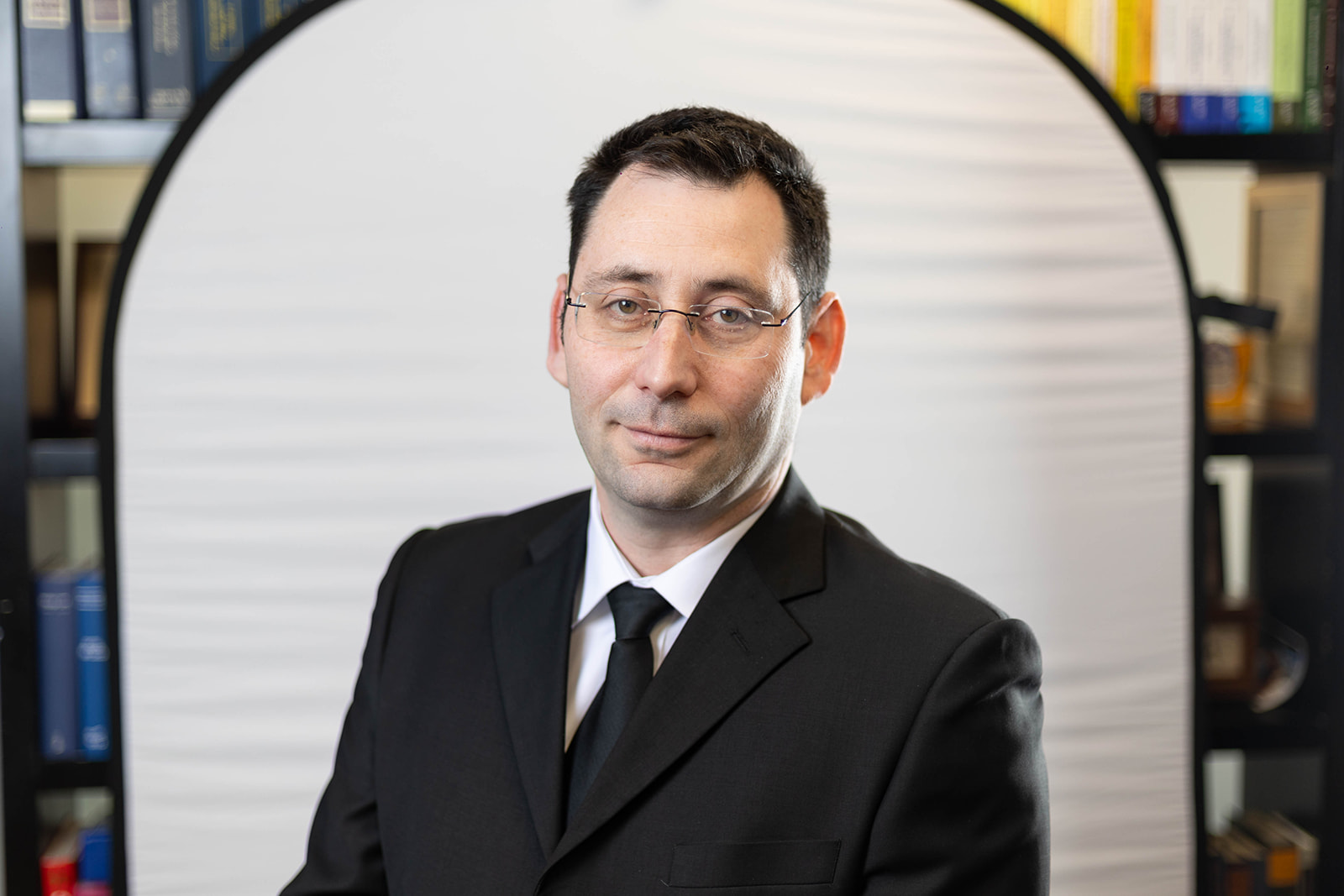
Article by
עמנואל טראץ’, עו”ד ונוטריון
עו”ד ונוטריון עמנואל טראץ’, עורך דין בעל ניסיון עשיר, חבר בלשכת עורכי הדין החל משנת 2011.
עורך דין פרטי ותיק, בעברו שימש כיועץ משפטי בחטיבה להתאמה ביטחונית בשב”כ (סיווג ביטחוני) ויועץ משפטי בתחום הפלילי והמנהלי. פועל בשוק הפרטי משנת 2013, ומייצג לקוחות פרטיים ותאגידים. בשירותו הצבאי, שירות כחוקר בכיר וראש צוות חוקרים במצ”ח ביחידה המרכזית לחקירות מיוחדות (ימל”מ).
הבהרה
המידע באתר הוא מידע כללי ואינו מידע מחייב. הזכויות המחייבות נקבעות על-פי חוק, תקנות ופסיקות בתי המשפט. השימוש במידע המופיע באתר אינו תחליף לקבלת ייעוץ או טיפול משפטי, מקצועי או אחר והסתמכות על האמור בו היא באחריות המשתמש בלבד
Contact for
Legal advice without obligation