
Appeal Against a Security Clearance Decision: Complete Guide
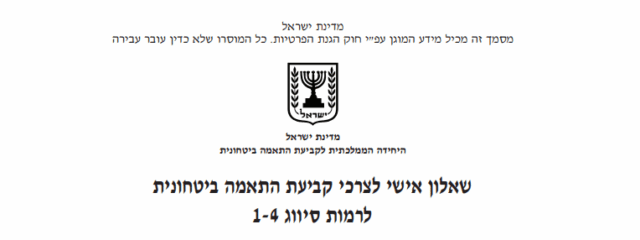
Receiving notice that your security clearance has been denied is a dramatic and pivotal moment in anyone’s career. For a soldier in a technology unit in the IDF, an engineer in the defense industry or a candidate for a position of trust in a government ministry, a finding of “security unsuitability” often means a complete halt to the professional path, serious damage to one’s personal reputation and closed doors to prestigious jobs.
It is important to understand, however, that a decision of the General Security Service (Shin Bet), of the Defense Establishment Security Department (MALMAB) or of the IDF Information Security Department is not a final verdict. Israeli law gives you the right to file an appeal against a security clearance decision (a procedure known as an “objection”), and in many cases, with proper and experienced legal representation, the decision can be reversed and the requested clearance restored.
The office of Attorney Emanuel Trach accompanies candidates through all stages of the vetting and appeal process, out of an understanding that proper preparation and legal guidance can make the difference between a thriving career and a painful and unjustified disqualification.
Representation by Attorney Emanuel Trach
An appeal against the denial of a security clearance is a sensitive process that requires knowledge of administrative law and a deep understanding of how the security establishment thinks. Attorney Emanuel Trach is an administrative law attorney with 15 years of experience. He holds a master’s degree in law from Tel Aviv University and a bachelor’s degree in law and business administration from Reichman University, and he focuses on advising and representing clients in security clearance proceedings.
Attorney Trach helps his clients in their effort to restore a denied security clearance, using legal tools that make it possible to challenge administrative decisions that are unreasonable. The legal support is not limited to the appeal itself, but also includes active work with the employer: alongside filing the objection, the office works to keep the client’s job and position until the appeal is decided, in order to limit the financial and professional harm as much as possible.
The legal framework: what is a security suitability check?
A security clearance is a professional assessment intended to determine a person’s “security reliability”. The aim is to make sure that the person does not pose a risk of leaking information, is not vulnerable to blackmail and has no ties to hostile elements. The leading body responsible for the process is the Shin Bet, acting under the Shin Bet Law and the General Security Service Regulations (Determining Security Suitability).
The regulations define and set the procedure for appealing a decision to deny a clearance or to find security unsuitability.
Security clearance levels: from 1 to 6
The clearance is divided into different levels, where the lower the number, the stricter the check:
- Level 1 (Top Secret, preferred/sensitive): the core of Israel’s secrets
- Level 2 (Top Secret, intelligence community): sensitive intelligence and information roles (Military Intelligence, MALMAB, Mossad, Shin Bet, senior officers).
- Level 3 (Top Secret): the level most common among soldiers, civil servants and defense industries.
- Level 4 (Secret): entry to security facilities and access to restricted information.
- Level 5 (Restricted): intended for contractors and outside parties who provide services inside facilities.
- Level 6 (Restricted, physical level): the most basic entry level to government offices.
For more information, see the complete guide to security clearance on our site.
Main grounds for disqualification in a security suitability check
To file an effective appeal you need to understand the ground on which you were disqualified. These are the main grounds that lead to a decision of unsuitability:
- Lack of reliability: lies, half-truths or concealment of information in the security interview or the questionnaire. This is the hardest ground to repair, since reliability is a threshold condition for any clearance.
- Drug use: active drug use or significant experiences that were not reported. The system examines whether the use indicates irresponsibility or a potential for blackmail.
- Risk of blackmail: heavy financial debts, gambling or reckless behavior that could be used by hostile elements to pressure the candidate.
- Ties to hostile countries: close ties with countries defined as a security risk, or relatives living in those countries.
- Criminal record: involvement in criminal matters, even where it did not end in a conviction (closed cases). The Shin Bet examines the nature of the offense and the time that has passed.
- Significant mental health history: significant behavior or mental health history may lead to a finding of security unsuitability where it raises concern about the candidate’s stability or ability to withstand pressure.
The objection process against a security clearance denial: step by step
The process of an appeal against a security clearance decision is complex and requires legal precision. A mistake in drafting the appeal could entrench the disqualification. This is how the professional work process looks in our office:
1. Initial meeting and full confidentiality
Before filing an objection, Attorney Trach invites the candidate to a meeting at his office. The entire meeting is protected by attorney-client privilege, which allows the client to reveal the whole truth without fear and so allows the lawyer to build the best strategy.
2. Review of the unsuitability notice
During the meeting, the lawyer reviews the security unsuitability notice, examines the reasoning and the circumstances that led to the disqualification and checks the lawfulness of each component of the notice. Sometimes the notice includes a “paraphrase” – a confidential summary of the incriminating information – and you need to know how to deal with it.
3. In-depth questioning
The lawyer questions the disqualified person about the security vetting process: what was asked in the security interview, how they responded, and whether there were problems during the polygraph in the security clearance process.
4. Assessment and filing of a reasoned objection
After a thorough review of all the information, the lawyer assesses the chances of the objection. If he finds that the decision is unreasonable or suffers from administrative flaws, he will act to file a reasoned objection before the Objections Committee. The appeal usually focuses on the passage of time, mitigating personal circumstances and proof of the candidate’s reliability today, and also challenges the basis on which the finding of security unsuitability was made.
The deadline for filing an objection – a short window of opportunity
It is important to remember that from the moment the notice of security unsuitability is received, the candidate has only 30 days to file an objection. Missing this deadline may lead to loss of the right to appeal. In exceptional cases an extension may be granted, but our recommendation is to contact a lawyer immediately upon receiving the notice of disqualification.
If the process drags on beyond reason even before a decision is made, it may be a case of a stuck security clearance, which requires proactive contact with the system.
Complex legal issues: self-incrimination and the polygraph
One of the biggest challenges in an appeal is dealing with statements the candidate made himself.
- Self-incrimination: in a security interview, many candidates admit to acts that were never documented (such as use of light drugs). Understanding the limits of self-incrimination in a security interview is essential in order to explain the context of the statements in the appeal.
- Polygraph: although the polygraph is not always admissible in a civil court, in the security establishment it is a decisive tool. Appealing polygraph results requires great skill and proof that the test was affected by a mental state or by external circumstances.
Checklist: preparing to fill in the questionnaire and for the objection process
Early preparation is the key to preventing a disqualification or to the success of an appeal. This is a list of documents that are important to prepare:
Personal details: identity cards, residential addresses over the last 10 years and details of relatives abroad.
Employment history: names of employers, reasons for leaving and details of references.
Financial situation: bank account numbers and details of significant loans or debts.
Travel abroad: details of destinations and dates over the last decade.
Criminal/disciplinary record: closed cases must also be reported.
The notice of disqualification: if you were disqualified, keep the original letter with the date it was received.
Candidates who understand the importance of legal advice before a security suitability process manage to reduce contradictions and to build a strong “credibility file”.
Frequently asked questions about appealing a security clearance decision
How long do I have to file an objection to a security unsuitability decision?
You usually have 30 days from the day you receive the notice. An extension is granted only in exceptional cases, so it is worth contacting a lawyer as soon as the letter arrives. That time is needed to collect documents, clarify the circumstances and build an organized argument.
Will I receive the full reasons for the disqualification?
The notice must include reasons, the period for which the disqualification is valid (up to 5 years) and the right to object. In practice the reasoning is usually phrased in general terms, because the regulations allow the content to be limited where there is concern of harm to security. Experience in dealing with security bodies usually makes it possible to identify what lay behind the decision and to direct the objection accordingly.
What is the difference between an objection and a petition to the court?
An objection is filed with the Objections Committee, an independent committee that reviews the decision anew, with the Shin Bet responding to it. The committee may accept the objection, reject it or return the matter for reconsideration, and it is required to weigh the freedom of occupation alongside security considerations. If the objection is rejected, a petition to the court may be considered depending on the circumstances. The court mainly examines the reasonableness of the decision and the integrity of the process.
Is it worth filing an objection if I really did not give full information in the interview?
Sometimes yes. The circumstances in which the information was withheld, the time that has passed, the conduct since then and the level of candor in the objection itself are all examined. An objection that presents the full picture and explains the background can change the assessment.
How long does it take to get an answer to an objection?
The regulations set a short timetable: the hearing is scheduled within 30 days of filing the objection, and the decision is given within 7 days of the end of the hearing. The committee may provide the full reasons up to 14 days after that.
If the objection was rejected, can I try again in the future?
Yes. If new facts have come to light or the circumstances have changed, you can request a review of the decision before the disqualification period ends, and the decision on the review can again be objected to before the committee. At the end of the period you can apply again and go through a new interview.
Is the meeting with the lawyer confidential?
Yes. Everything said in the meeting is protected by attorney-client privilege and is not passed to any party without your consent. This allows you to lay out the whole picture without fear and to build the objection on full facts.
Why is the representation of Attorney Emanuel Trach critical for you?
The process of an appeal against a security clearance decision is not an ordinary bureaucratic battle – it is a fight over your right to work in the profession you chose and over your good name. The security establishment is a powerful body, but it is bound by the rules of natural justice and administrative law.
Attorney Emanuel Trach brings a combination of:
- Administrative law experience: 15 years of experience before state bodies, including the Objections Committee, and familiarity with the relevant case law.
- Security understanding: familiarity with the clearance requirements and the different interrogation methods.
- Focus on results: determined advocacy for the client’s freedom of occupation.
- Mental preparation: preparation for a security interview services that reduce the chance of disqualification in advance.
If you received a notice of security unsuitability, do not hesitate. Your future is at stake.
Further reading: How long does a security clearance take
To contact the office of Attorney Emanuel Trach and arrange an urgent consultation – click here
Contact for
Legal advice without obligation